
Why Edibles Feel Stronger Than Smoking
Written by Thomas Crouse, PharmD.
What Is Pharmacokinetics (PK) in Cannabis?
Pharmacokinetics (PK) is what the body does to cannabis compounds over time—how they are absorbed, distributed, metabolized, and excreted. Pharmacodynamics (PD) is what those compounds do to the body—how they create effects through receptor binding and signaling. This article focuses on PK for edibles (oral ingestion); future articles will cover PK for other routes and PD of cannabis constituents.
The foundational understanding of pharmacokinetics begins with the acronym ADME (absorption, distribution, metabolism, and excretion). It all begins with absorption, or how the drug enters the body, which is different than bioavailability, the percent of the drug that reaches systemic circulation in an “active” form. Several factors affect the bioavailability of cannabinoids, including gastric acidity, intestinal absorption rates, and first-pass hepatic (liver) metabolism before entering systemic circulation.
Ingested THC is often estimated as ~10–15% bioavailable (individual variability can range from 4-20%), while ingested CBD is often estimated as ~10% bioavailable.
Absorption: How Edibles Enter the Body
Absorption of lipophilic (fat-loving or oil-based) molecules, such as cannabinoids, is significantly impacted by a fed versus non-fed state (with or without food). Macronutrients matter; fat stimulates bile release and micelle formation, helping lipophilic molecules dissolve and cross the intestinal barrier more efficiently. In general, food will slow gastric emptying into the small intestine, leading to a longer onset, but will actually increase the fraction of the dose absorbed. Meanwhile, an empty stomach will empty faster, but lead to less of the dose being absorbed. An empty stomach exposes the drug directly to an acidic environment, which can degrade part of the dose before it reaches the small intestine for absorption.
An empty stomach often has a faster onset (rapid gastric emptying) but can be less predictable and sometimes result in lower overall exposure. Fed state (especially with fat) often has greater overall exposure, but may peak more slowly because the stomach empties more slowly during digestion.
Distribution: Why Edibles Last Longer
Distribution refers to how a drug is transported and dispersed into tissues, where it interacts with cell receptors, leading to a pharmacological effect. Cannabinoids in the neutral form, such as THC, are lipophilic and will not be carried in the blood, which is hydrophilic (“water-loving” or water-based), without being protein-bound. As cannabinoids circulate, they slowly dissociate from carrier proteins, acting as a “circulating reservoir” and enter tissues, especially fatty tissues, causing a prolonged “tail” of effects. Cannabinoids that are stored in fatty tissues can be slowly released into circulation, leading to longer duration of effects and drug detection windows, especially in chronic consumers. Enterohepatic circulation, in which the liver secretes lipophilic substances into bile that are then reabsorbed a second time in the intestines, creates unique blood-level patterns, such as a “dual peak,” with a second wave extending the duration of effects. The acid form of cannabinoids, such as THCA, is hydrophilic and can circulate in blood “freely” but will not pass through the blood-brain barrier, which is lipophilic. As a result, THCA is distributed into peripheral tissues at a different ratio than THC without causing intoxication in the central nervous system.
Consuming THCA without decarboxylation produces different effects than THC because the compound’s polarity limits brain exposure while still distributing to body tissues.

Initial blood concentration is nearly 1:1 THC to 11-hydroxy-THC, and a dual peak is observed due to delayed distribution and enterohepatic circulation.
Citation: Favrat, Bernard & Ménétrey, Annick & Augsburger, Marc & Rothuizen, Laura & Appenzeller, Monique & Buclin, Thierry & Pin, Marie & Mangin, Patrice & Giroud, Christian. (2005). Two cases of “cannabis acute psychosis” following the administration of oral cannabis. BMC Psychiatry. 5. 17. 10.1186/1471-244X-5-17.
Metabolism: Why Edibles Feel Stronger
Metabolism can occur in many different ways, but the most significant happens in the liver. Hepatic metabolism is facilitated by enzymes known as CYP’s. Cannabinoids are metabolized by numerous CYP enzymes, resulting in multiple metabolic pathways that contribute to their large therapeutic index (a high margin between safe and toxic doses). CYP enzyme activity varies with genetic predispositions, creating a spectrum in which individuals may be poor or rapid metabolizers. Drug interactions can also impact CYP enzymes. Many drugs are metabolized by the same CYP enzymes as cannabinoids, leading to molecular competition. Drugs can also be CYP inhibitors or inducers, thereby altering the activity of that specific enzyme.
The liver’s ability to use multiple CYP pathways for metabolism contributes to a large therapeutic index, meaning cannabinoids have a favorable safety profile with a wide margin between therapeutic and toxic doses.
When molecules are absorbed from the small intestine, they enter the portal vein, which first passes through the liver before reaching systemic circulation. As a result, the liver alters a fraction of the molecules before they reach the body, converting them into pharmacologically active or inactive forms. For example, some drugs are administered in an active form and partially inactivated before reaching the body, leading to a lower bioavailability. Conversely, some drugs are administered as prodrugs, meaning they are metabolized into the active form and then inactivated through a second metabolic conversion process. A common example of this is codeine, which is metabolized into morphine to provide its analgesic effects.
The liver metabolizes compounds to inactivate them and eliminate them from the body; however, some compounds form active intermediate metabolites before being inactivated in a series of metabolic reactions.
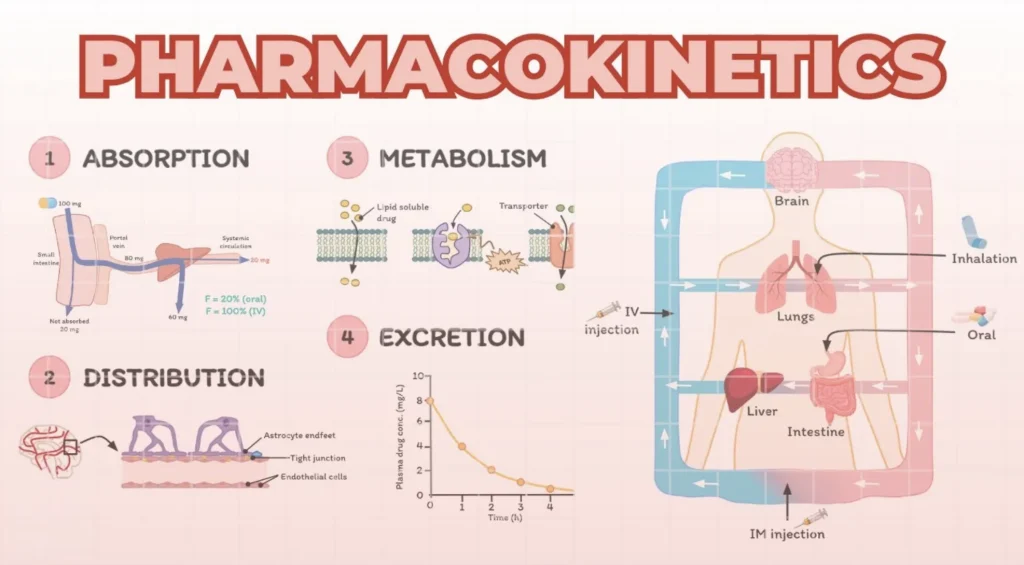
Ingested compounds are absorbed in the intestines and pass through the liver before entering the body’s bloodstream.
Citation: Ritter, J., Flower, R.J., Henderson, G., Yoon Kong Loke and Rang, H.P. (2018). Rang and Dale’s Pharmacology. 9th ed. Endinburgh: Elsevier.
THC is unique in that it is already active, but is also metabolized to the more potent 11-hydroxy-THC (11-OH-THC) and then to the inactivated 11-nor-9-carboxy-THC (THC-COOH). 11-hydroxy-THC is estimated to be 50-100% more potent at activating CB1 receptors in the brain compared to THC. While metabolism into the potent 11-hydroxy-THC happens during inhalation, it is at a much lower ratio and occurs after THC has already reached systemic circulation from the lungs. Ingested THC reaches systemic circulation close to a 1:1 ratio with 11-hydroxy-THC. Conversely, CBD is metabolized into an active form, 7-hydroxy-CBD, which has potency equivalent to CBD.
Even though ingested cannabinoid bioavailability is lower than inhalation, edibles can feel stronger and last longer because metabolism produces potent active metabolites, and distribution prolongs the “tail” of effects.
Excretion: How THC Leaves the Body
Excretion is the process of eliminating inactive metabolites from the body. The liver continues to metabolize chemicals as blood circulates through it, inactivating them into forms suitable for excretion. A typical excretion profile is >65% excreted in feces and ~20% in urine with ~80–90% excreted within ~5 days, largely as hydroxylated/carboxylated metabolites, where THC-COOH glucuronide is a primary urinary metabolite marker.
A positive urine test doesn’t necessarily indicate current impairment—distribution and slow release can prolong the presence of metabolites.
Key Takeaways on Edible Cannabis:
- PK vs. PD: Pharmacokinetics (PK) describes what the body does to cannabinoids over time (ADME), while pharmacodynamics (PD) describes what cannabinoids do to the body through receptor binding and signaling. This article focuses on PK for edibles; later articles will cover other routes and PD.
- ADME is the roadmap: Edible experiences are shaped by Absorption, Distribution, Metabolism, and Excretion, and bioavailability (the fraction of active drug reaching systemic circulation) is not the same as absorption. GI conditions and first-pass liver metabolism are major reasons oral effects vary.
- Oral bioavailability is low (but not weak): Ingested THC is often ~10–20% bioavailable and CBD ~10% due to digestive losses and first-pass metabolism. Despite this, edibles can still feel stronger and last longer because of metabolite formation and tissue distribution.
- Food changes both intensity and timing: A fed state—especially with fat—often increases exposure by improving absorption of lipophilic cannabinoids, but it can delay onset due to slower gastric emptying. A fasted state may hit faster but can be less predictable and sometimes lower in overall exposure.
- Distribution creates the “long tail”: Cannabinoids are mostly protein-bound in blood and slowly redistribute into tissues, especially fat, where THC can be stored and released over time. This prolongs effects and extends detection windows, particularly in chronic consumers.
- THCA distributes differently than THC: THCA (acid form) is more hydrophilic and can circulate more freely in the blood, but does not effectively cross the blood-brain barrier, limiting CNS intoxication unless decarboxylated. This shifts effects toward peripheral tissue distribution rather than psychoactivity.
- Recirculation can cause “waves”: Enterohepatic circulation can reintroduce cannabinoids/metabolites into the intestines for reabsorption, contributing to dual-peak blood levels and a second wave of effects. This is one reason edible effects can feel like they come in phases.
- CYP metabolism drives variability and interactions: Cannabinoids are metabolized through multiple CYP pathways, which supports a wide therapeutic index, but genetics can make people poor or rapid metabolizers. Other drugs can inhibit or induce CYP enzymes, altering the extent and duration of drug exposure.
- THC’s first-pass metabolite is uniquely potent: Oral THC produces substantial 11-hydroxy-THC, estimated 50–100% more potent at CB1 than THC, and ingestion can approach a ~1:1 THC:11-OH-THC ratio. This helps explain why edibles can feel more intense and longer-lasting than inhalation at similar doses.
- Excretion doesn’t equal impairment: Cannabinoids are inactivated into more water-soluble metabolites for elimination, commonly via feces and urine (with THC-COOH glucuronide as a key urinary marker). Because THC is stored and slowly released from fat, a positive urine test may persist well beyond impairment.
Curious to experience the difference for yourself? Visit a Nova Farms dispensary to explore our selection of edible cannabis products and get personalized recommendations from our team.
Find a Nova Farms location near you!

Cannabis: A Journey into the Green Realm
Unravel the mysteries of cannabis – from its healing powers to cultural significance. Explore strains, creativity, and the evolving landscape.

Shop Highlands Cannabis Products at Nova Farms Dispensaries
Highlands has expanded from its Massachusetts roots to include farms in Maine and New Jersey, bringing its signature sun-grown philosophy
Cannabis Etiquette 101: Be Responsible with Edibles
Learn about responsible cannabis edible consumption with Nova Farms, where you can amplify your enjoyment with lab-tested, delectable products!
Vaping Cannabis for Effective Pain Management
Learn how cannabis vaping offers swift pain relief with precise dosing, all grounded in a commitment to quality. Find out